
Jeju Island is one of the most beautiful travel destinations in South Korea, and most visitors travel there by plane. If you book in advance, you can find round-trip flights for around 150,000 to 200,000 won. One of the most important things to consider when planning a trip to Jeju is your travel route. Although the island may not seem very large, getting around by rental car is much more convenient. In particular, dividing your itinerary into the east, west, south, and north can help you make the most of your time. Renting a car is almost essential on Jeju Island. While public transportation is available, it can take a long time to get around. If you are able to drive, it is highly recommended to rent a car and enjoy the scenic coastal roads. The best times to visit Jeju are from May to June and from September to October, when the weather is pleasant and the scenery is at its most beautiful.
Jeju Island Travel Types: Package Tour vs. Independent Travel
Package Tours (through travel agencies)
Package tours are convenient because flights, accommodation, and rental cars are booked together. A typical 3-night, 4-day trip costs around 650,000 to 700,000 won per person. However, some packages include shopping stops, so it’s important to check the itinerary before booking.
Independent Travel: Freely by rental car or public transportation
Independent travel allows you to plan your own itinerary freely. The total cost, including flights and accommodation, is usually around 1 million won per person. The main advantage is flexibility—you can travel wherever and whenever you want.
If renting a car is too expensive, Jeju’s bus system is a good alternative. Buses connect major tourist attractions, and transportation cards offer discounts. There are also organized bus and yacht tours, which can help you explore the island efficiently in a short time.
Jeju Airport Bus
If you prefer not to drive, taking public buses is a convenient way to explore Jeju Island. Many routes run along the coast, offering beautiful ocean views along the way. Most buses operate every 15–20 minutes, though frequency may vary by route.
- Bus No. 100: A key route connecting Jeju Airport, downtown Jeju City, and Dongmun Market.
- Bus No. 200: Connects Jeju City and Seogwipo City.
- City Bus No. 600: One of the most popular tourist routes, passing major attractions such as Hallasan Mountain, Seongsan Ilchulbong Peak, and areas near Udo Island.
- Bus No. 701: Goes to Seongsan Ilchulbong Peak.
- Bus No. 740: Operates to the Eorimok Trail on Hallasan Mountain.
- Bus No. 600 or 282: Serves the Jungmun Tourist Complex.
- Bus No. 202: Goes to Hyeopjae Beach.
One-Day and Half-Day Tours
You can join a one-day bus tour in Jeju Island for around 20,000 won. The western course includes popular attractions such as Osulloc Tea Plantation, Hyeopjae Beach, Sinchang Windmill Coastal Road, Handam Coastal Road, and Aewol Coastal Road. The tour typically ends at Iho Tewoo Lighthouse, Rainbow Coastal Road, and Dodubong Peak.
For more active experiences, Jeju yacht tours cost between 30,000 and 50,000 won. These tours often include activities such as fishing and dolphin watching. If you want to explore more tour options in Jeju, you can check platforms like MyRealTrip.
Jeju’s Most Iconic Travel Attraction: The Sea
If I had to choose the top things to do and places to visit in Jeju, I would highlight its nature, beautiful coastline, scenic viewpoints, and popular tourist attractions. Jeju Island offers stunning beaches, famous sunrise spots, and a variety of museums. And of course, you can’t miss Jeju’s signature cuisine.
1. Jeju’s Nature and Sea – Hyeopjae Beach
Hyeopjae Beach is one of the most famous beaches in Jeju, known for its stunning emerald waters. With its long coastline and soft, white sand, it is perfect for a relaxing walk or simply unwinding by the sea. It is also conveniently located near Hallim Park, making it easy to visit both in one trip. You can rent beach tables or parasols nearby; tables cost around 60,000 won, and parasols are about 20,000 won.
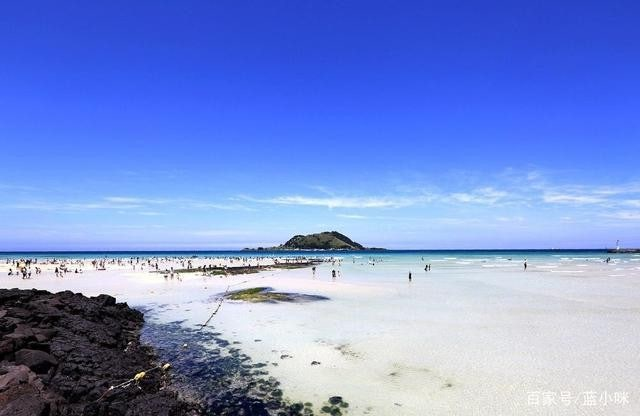
(Photo source : 한국여행)
2. Yakcheonsa Temple & Daepo Jusangjeolli Cliffs – A Temple and a Scenic Volcanic Landscape
Yakcheonsa Temple is known for its impressive size and grandeur, and admission is free, making it an easy and worthwhile stop during your trip. Located nearby, the Daepo Jusangjeolli Cliffs feature a unique rock formation created by volcanic activity. Here, you can admire stunning coastal scenery that looks like a natural work of art.
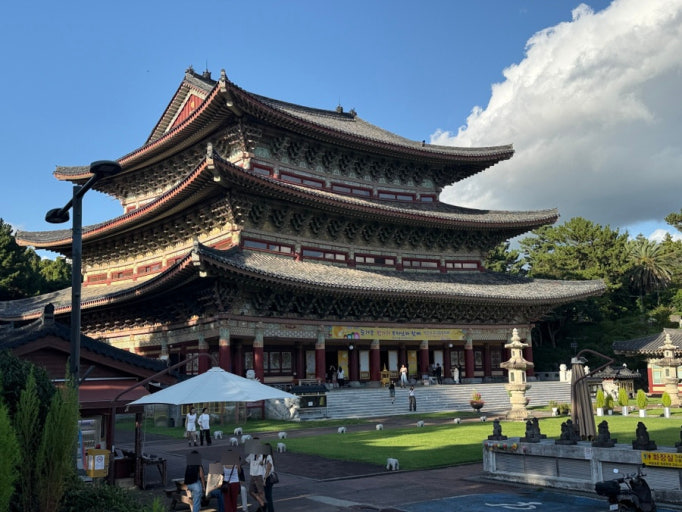
(Photo source: 떠날식의 트래블로)
The columnar joints were formed when lava from a volcanic eruption cooled slowly as it reached the surface, causing it to contract and crack into vertical columns. Parking fees are 1,000 won for compact cars, and admission is 2,000 won per adult.
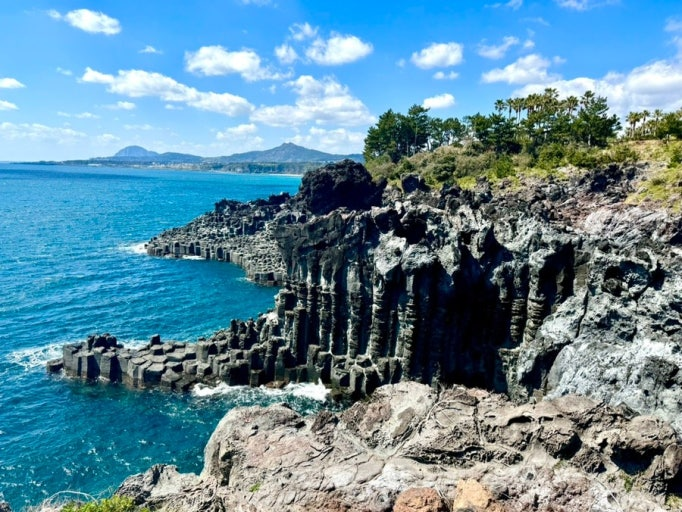
(Photo source: 여행하는 챠밍엔)
3. Yongmeori Coast – Famous Seaside Walking Spot
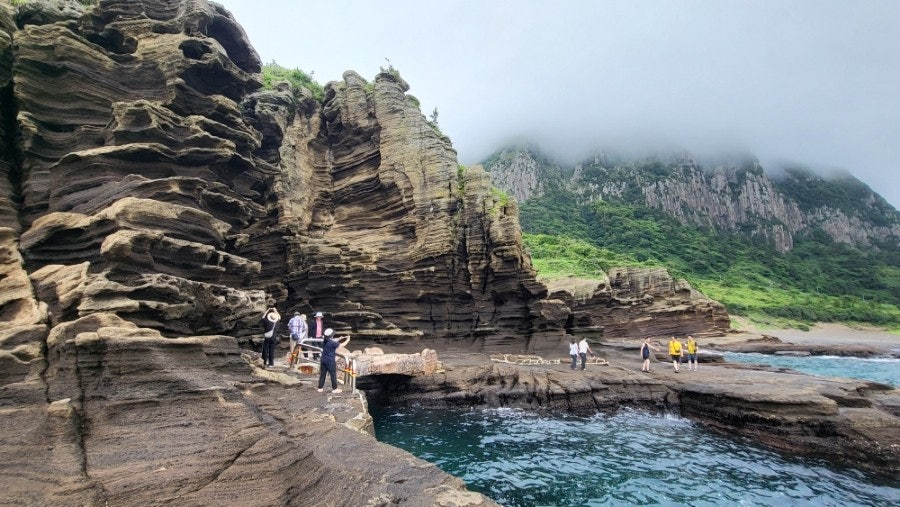
(Photo source: 하하제주)
Yongmeori Coast is a unique coastal landscape created by waves and wind, making it a must-visit attraction during a trip to Jeju. However, please note that entry may be restricted depending on weather and wave conditions, so it is important to check before visiting.
4. Seopjikoji & Seongsan Ilchulbong – A Famous Filming Location with Stunning Coastal Scenery
Located on the eastern side of Jeju Island, Seopjikoji is one of the island’s most iconic natural attractions, often visited together with Seongsan Ilchulbong. The name “Seopjikoji” comes from “Seopji,” meaning “narrow land,” and “Koji,” a Jeju dialect word for “cape.” Its long, narrow stretch of land extending into the sea creates a uniquely beautiful coastal landscape.
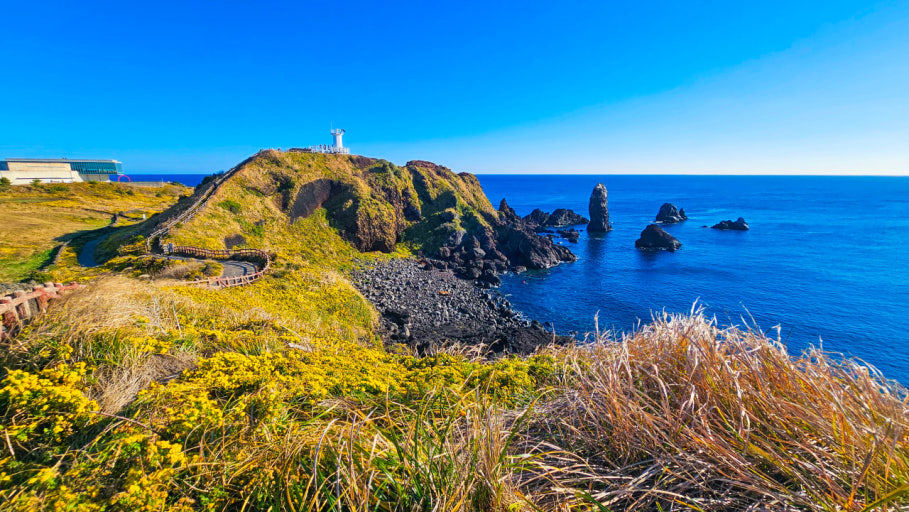
(Photo source: 황산벌)
Unlike other oreums on Jeju Island, Seongsan Ilchulbong is a tuff cone formed by a volcanic eruption underwater. When hot magma came into contact with cold seawater, the resulting volcanic ash absorbed moisture and became sticky. Over time, this process created distinct layers, eventually forming Seongsan Ilchulbong. Admission is 5,000 won for adults, and it is a must-visit destination on any trip to Jeju Island.
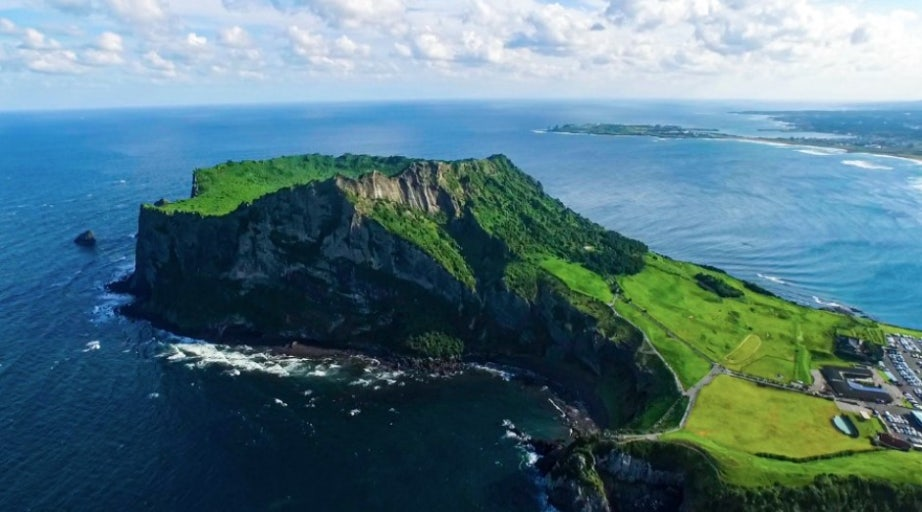
(Photo source: 끄적거리는 상어)
Jeju Island Museum
Arte museum jeju

Arte Museum Jeju is an immersive media art museum where visitors can experience stunning digital exhibitions. Originally a speaker manufacturing factory, it has been transformed into a large-scale exhibition space covering approximately 1,400 pyeong. With 10-meter-high walls used as massive screens, the museum showcases the world of media art through cutting-edge technology. The exhibitions are themed around the concept of “eternal nature” expressed through light and sound, beautifully recreating scenes such as beaches, waves, and waterfalls.
The museum is open year-round from 10:00 AM to 8:00 PM, with last admission at 7:00 PM. It is a must-visit destination on any West Jeju itinerary. Admission is 18,000 won for adults, and the experience is well worth the price, offering a wide range of visually captivating artworks.
Jeju stone park
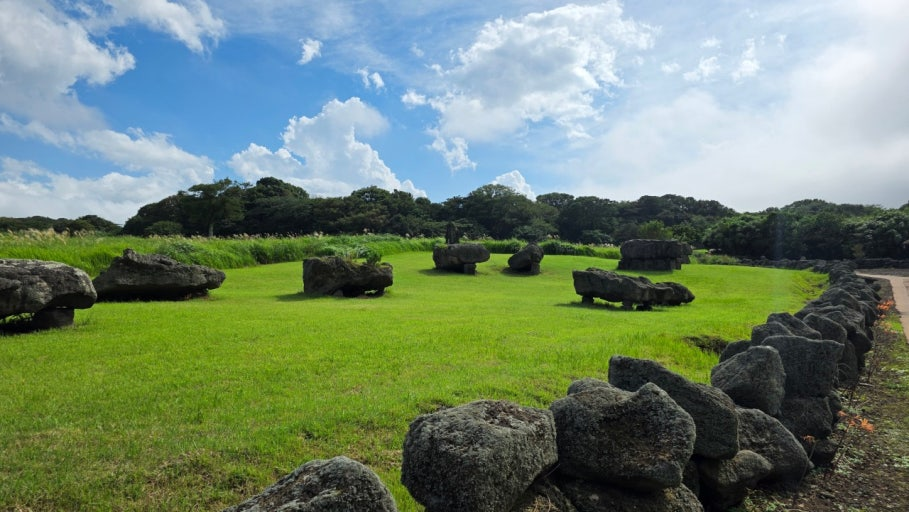
Jeju Stone Culture Park, known as a filming location for When Life Gives You Tangerines, is a cultural and ecological park that showcases the unique stone heritage of Jeju, often referred to as the “Island of Stones.” Admission is 5,000 won for adults, and visitors can explore a variety of exhibition spaces, including the Jeju Stone Museum, the Stone Culture Exhibition Hall, and traditional Jeju thatched houses. You can also receive a 500 won discount by booking tickets in advance through Naver.
Conclusion
The level of satisfaction you get from a trip to Jeju Island largely depends on how well you plan it. By organizing your itinerary and deciding on your mode of transportation in advance, you can enjoy a much more relaxed and efficient journey. From its beautiful coastline and natural scenery to iconic landmarks like Seongsan Ilchulbong and Hyeopjae Beach, as well as unique attractions like Arte Museum Jeju, Jeju offers a wide range of experiences in one destination. Rather than trying to visit too many places, I recommend creating your own itinerary and taking your time to fully enjoy the island. As you relax and immerse yourself in nature, you’ll soon find yourself completely captivated by the charm of Jeju.