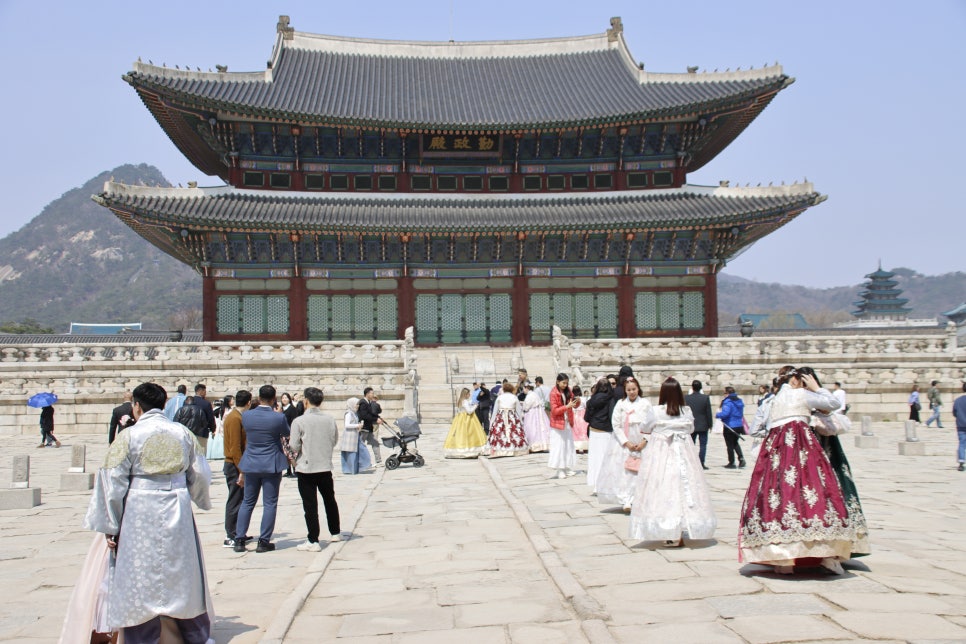
A special day in the heart of Seoul where you can experience both the past and present! From exploring Gyeongbokgung Palace, stepping into Joseon history, to strolling through Bukchon Hanok Village along traditional hanok streets, and all the way to Samcheong-dong filled with charming cafes. Jongno is the perfect destination for a deep and rich experience, even in just one day. This article will introduce Jongno’s essential routes and useful tips!
| Time | Location | Activity Details |
| 9:00 AM~11:30 AM | Gyeongbokgung Palace | Tour Geunjeongjeon Hall, Gyeonghoeru Pavilion, National Palace Museum of Korea; photo session |
| Lunch 12:00 PM–1:30 PM | Bukchon Hanok Village | Lunch at a traditional Korean restaurant |
| Afternoon 1:30 PM~4:00 PM | Bukchon Walk and Experience | Hanbok experience, stroll along Hanok Village streets, traditional culture experience |
| Evening 4:00 PM~6:00 PM | Samcheong-dong Cafe Street | Visit a charming cafe, tea time, dessert time |
Gyeongbokgung Palace, the symbol of Seoul’s Jongno District

(Photo source: 행복이 가득한 하루)
When you think of Seoul’s Jongno, the first place that comes to mind is Gyeongbokgung Palace. It’s the representative palace of the Joseon Dynasty and an essential stop for any tourist visiting Korea. It’s also famous as a destination for families, friends, and dates. It’s the symbol of Seoul’s Jongno.
Gyeongbokgung Palace Visitor Information
Wearing hanbok grants free admission to Gyeongbokgung Palace. With numerous hanbok rental shops near the palace, dress in your desired design and capture memorable photos. Since many visitors wear hanbok, create wonderful memories wearing traditional attire at both Bukchon Hanok Village and Gyeongbokgung Palace.
- Address: 161 Sajik-ro, Jongno-gu, Seoul
- Hours: 9:00 AM ~ 6:30 PM (Closed every Tuesday)
- Admission Fee: Adults 3,000 KRW / Free for those under 24 years old or wearing hanbok
- Estimated Time: Approximately 2 hours
- Parking: 3,000 KRW per hour (Eco-friendly vehicles may use the underground parking lot)
- Ticket Office: In front of Heungnyemun Gate near the main gate (Gwanghwamun side) / Unmanned ticket machines available
Key Points Not to Miss
The names of the buildings within Gyeongbokgung Palace are unfamiliar and difficult. They hold meaning within them. Knowing the meanings below will make your visit more enjoyable and help you remember them more meaningfully.
- Geunjeongjeon: The place where the king conducted official business. The political center of the Joseon royal court.
- Gyeonghoeru Pavilion: A banquet hall built over a pond within the palace grounds. A popular photo spot!
- Hyangwonjeong Pavilion: A tranquil pavilion situated on a circular pond. A hidden healing spot within Gyeongbokgung.
- Changing of the Guard Ceremony: A traditional guard change performance held daily at 10:00 and 14:00.
- Sarang Cafe: The only public cafe inside Gyeongbokgung. Located near Gyeonghoeru Pavilion, it’s a great spot for a quick break.
Sarang Cafe – Gyeonghoeru Pavilion
Sarang Cafe within Gyeongbokgung Palace is the only general cafe where visitors can take a break and enjoy beverages during their tour. Located near Gyeonghoeru Pavilion, it’s easy to find. Its small interior space means many opt for takeout, spending leisurely time on the outdoor benches, wooden platforms, or resting areas. Located within the pond, Gyeonghoeru Pavilion is a prime photo spot for beautiful pictures. Its interior is accessible only through special tours. However, the view from the king’s seat and the picturesque scenery reflected in the pond are must-post Instagram photos.
Hyangwonjeong Pavilion

(Photo source: 행복이 가득한 하루)
Passing by Gyeonghoeru Pavilion on the way to Hyangwonjeong Pavilion, you’ll find a pond, and the circular pond (Hyangwonji) will catch your eye. The distance is short, making it perfect for a light stroll. Hyangwonjeong Pavilion is particularly the most tranquil and picturesque spot in Gyeongbokgung Palace, and the National Folk Museum of Korea is nearby, making for an efficient sightseeing route. Be sure to visit the National Folk Museum of Korea as well.
National Folk Museum of Korea
Located east of Gyeongbokgung Palace, it exhibits various aspects of Korean traditional life, customs, and traditions. It operates three permanent exhibition halls, an outdoor exhibition area, and a children’s museum, making it a popular destination for families.
- Hours: Weekdays and weekends 09:00-18:00
- Admission: Free
- Location: Directly accessible from Gyeongbokgung Palace, or walk from Exit 5 of Gyeongbokgung Station (Subway Line 3) or Exit 1 of Anguk Station.
Stone Wall Path: Bukchon – Seochon – Cheong Wa Dae

(Photo source: 행복이 가득한 하루)
Following the outer perimeter of the palace, you’ll find a large stone wall path perfect for strolling. The walk takes about 45 minutes, and nearby you can enjoy Korea’s diverse historical and cultural sites like Bukchon, Seochon, and the Blue House. Beautiful year-round, each season offers distinct scenery, making it a great spot to visit anytime. Especially in autumn, the vibrant foliage and ginkgo tree-lined paths make it the most picturesque location. If visiting in autumn, after touring Gwanghwamun and Hyangwonjeong Pavilion inside Gyeongbokgung Palace, exit through the palace’s North Gate (Sinmumun) and stroll towards Samcheondong or the Sarangchae (women’s quarters) area.
National Palace Museum of Korea
- Operating Hours: 10 AM – 6 PM / Open until 9 PM on Wednesdays and Saturdays
- Admission Fee: Free (Currently offering free admission for a limited time)
- Location: Located near Exit 5 of Gyeongbokgung Station. You can see the National Palace Museum of Korea first on the way to Gyeongbokgung Palace.
National Museum of Korean History
Be sure to visit the 8th-floor rooftop observatory. It offers a spectacular view overlooking Gyeongbokgung Palace and Gwanghwamun Square. The building with the large sign at Gwanghwamun Square is the National Museum of Korean History.
- Hours: 10:00 AM – 6:00 PM / Open until 9:00 PM on Wednesdays and Saturdays
- Admission: Free
Bukchon Hanok Village
A 10-minute walk from Gyeongbokgung Palace lies Bukchon Hanok Village, preserving traditional beauty. This area features well-preserved old houses where Joseon Dynasty nobles once lived, offering a glimpse into Seoul’s past.
- Location: 5-minute walk from Anguk Station Exit 1
- Features: As it’s an actual residential area, quiet viewing is essential!
- Hanbok Experience: Numerous rental shops nearby let you add traditional charm while strolling the hanok alleys.
- Traditional Experiences: Reservation-based programs like tea ceremony, calligraphy, and hanji (Korean paper) crafts are available.
Bukchon 8 Scenic Views – Top Photo Spots in Bukchon Hanok Village
8 Must-Visit Photo Spots in Bukchon If you want to capture beautiful, memorable photos, be sure to visit these locations. Gahoe-dong 31 Area > Bukchon-ro 11-gil Observatory > Gahoe-dong Fortress Wall Path > Near Changdeokgung Stone Wall Path > Bukchon Culture Center > Hanok Hill Path > Next to Jeongdok Library > Entrance View of Samcheong-dong
Nearby Restaurant: Samgye Baekban Mugook

(Photo source: 오늘부터 새로운 여행)
Mugook, located next to the National Museum of Modern and Contemporary Art and the Open Songhyeon Green Tourism Area, is a famous restaurant popular even among Japanese travelers. There’s often a wait, so we recommend arriving early to make a reservation and taking a stroll around the area. The highlight of the restaurant is the two large cauldrons in the center of the dining hall, where you can enjoy watching the cooking process of the chicken stew. Recommended dishes include the Northern-style samgyetang set meal and the spicy squid and chicken salad. Most dishes are designed for two people, making them popular choices.
- Since there might be a wait, grab a number and enjoy strolling through the Bukchon alleys while you wait!
- Address: 7, Yulgok-ro 1-gil, Jongno-gu, Seoul, Republic of Korea
The charming cafes of Samcheong-dong
After strolling through Bukchon, the best place to leisurely wrap up your day is the cafe street in Samcheong-dong. This street, where tradition and modernity blend harmoniously, is lined with unique cafes and dessert shops, making it a delight to walk through.
Popular Cafes
The cafes in Samcheong-dong are not only aesthetically pleasing on the outside but also offer many photo spots, making them perfect for taking Instagram-worthy pictures. Below are some cafes worth visiting.
Conclusion
Jongno is more than just an ‘old neighborhood’. From Gyeongbokgung Palace, where you can feel the breath of Joseon, to Bukchon Hanok Village, where traditional beauty lives and breathes, to the charming streets of Samcheong-dong! It’s a special place where past and present coexist. When you want to take a break from your busy daily life, or spend a whole day walking to feel Seoul’s true charm, be sure to follow the Jongno travel course introduced today.